

Single Parenthood & I: Bread Bin of Heaven
It's not that I hyper-fixate or anything, but no matter how small one aspect of my life might be, I commit to it. And so it turned out with my quest for a new bread bin.

Though bread bins have only ever really been a peripheral part of my life, they have always been there. Bread starts to turn stale very quickly if left in the open, and if you live in a household which consumes humanity’s oldest and most stable foodstuff regularly, having one is pretty much essential unless you’re the sort of maniac who eats a whole loaf in less than one day.
Although I had a bread bin, I am shame-faced to admit that I have not always been a consistent user of it in the past. Our groceries arrive via the magic of online delivery, and one of the most pressing emotions that I feel when I receive one is a vague fluster about not leaving the driver hanging around too long, which results in loaves of bread often being balanced on top of it rather than inside it.
And a couple of weeks ago, I made the mistake of opening it, unaware of the fact that a cinnamon bun had been sitting undisturbed inside it for a good few weeks. Good lord. It was the foul odour of Satan’s armpit. How could cinnamon and pastry make such an appallingly Luciferian smell? I quickly slammed the lid back shut and opened the back door and kitchen window.
This wasn’t an emergency, but it did require attention. And I do have to admit, I love this sort of thing. Sitting down on the green leather sofa in my living room with a cup of tea, I thought to myself, “What an opportunity. You don’t know anything about bread bins, and now for health and safety reasons you have literally no choice but to learn about them.”
I mean, I didn’t have to learn about them. I could have just walked 100 yards to The Range and bought one. But where’s the fun in that? This would involve a trip to the ginormobarn, and I couldn’t make a decision of such magnitude without involving the children.
“Right then, Wingus and Dingus,” I exclaimed to Older and Younger in a tone deliberately styled to invoke that of Phileas Fogg setting off around the world in 80 days, “we’re going shopping!”, as they sat playing a video game that I absolutely do not understand.
Rather than unrestrained glee, I was greeted with a collective rolling of eyes. “What do we need?”, asked Older with the tone of someone who already knew that there wasn’t anything in his life that he needed at that precise moment in time. “Is it a pizza with a hot dog sausage in the crust?”, asked Younger, hopefully, recalling the freezer section in which he found something that Italians would consider a declaration of war.
“Not very exciting, but we need a new bread bin,” I replied to Older, not really expecting him to understand what I meant. “Oh, I opened that the other week and it stank,” he replied. “Why didn’t you tell me?”, I asked, “I thought it was empty.” He shrugged, and wandered off to put his trainers on.
This was a mere recce mission, a low-key surveying of the landscape of planet bread bin, an opportunity to dip a toe into the bread bin lifestyle in 2026, to see what was out there. I didn’t have to buy one. This was mere reconnaissance. What types were there? How much did they cost? What were my options?
The branch of The Range near my house is a wondrous place, full of kitchenware, things with “Live Laugh Love” printed on them, and frozen pizzas that reflexively make you reach for the United Nations’ telephone number, but it does have one fundamental flaw that seems to afflict a lot of retail, these days. The shelves simply don’t have the prices of any of the foods for sale on them.
In the case of this particular store, the easiest thing to do is to search on their website while browsing. The prices are the same. They had a strangely wide array of bread bins, but only one of them was priced up, at £18. I opened the website, already aware that the kids were wandering off in the direction of the frozen food section.
Online, they have a far wider selection. It turns out that bread bin life is more rich and varied than I would ever have imagined. There are plenty of straightforward cheap metal ones which look as though they’ll dent the moment you touch them, as well as plastic ones which over-emphasise how airtight they are, as though creating a vacuum will allow your bread to live forever, and entropy and the eventual heat death of the universe aren’t a thing. Some had wooden lids, which doubled up as bread-slicing boards. “Clever,” I thought to myself.
But there was a whole subsection into which I was quickly sucked, which I shall shorthandedly call the ‘artisanal’ style. Mostly wooden, these are for the home baker or Waitrose habituator who wants to show off their sourdough. In some cases they have frosted glass doors, the culinary equivalent to flashing a bit of ankle in the direction of a flustered Victorian gentleman. They often have two storeys or more, for those who really consider patisserie to be a crucial component to their lives.
And there was one which immediately caught my eye. Made of bamboo and with a shutter that rolled down to open and close it, it instantly reminded me of my childhood. Moreover, it was reduced from £36 to £15, with free delivery. I showed the kids. “OooooOOOooo,” was their response, which I couldn’t tell was genuine or mocking, though I suspected the latter.
Back home on the sofa, I researched further, but the usual suspects - Amazon, Dunelm, Wayfair - were all offering the same, multiple variations on those who valued long life, those who valued cheapness, and those who valued making it look as though you’d been up since 4am making your own baguettes. I realised that I wasn’t going to get a better deal than this retro-looking wooden one for fifteen quid with free delivery, and clicked the order button. I’d receive it, their obsequious confirmation order told me, at some point in the next five days. I put it out of my mind and went about my daily life.
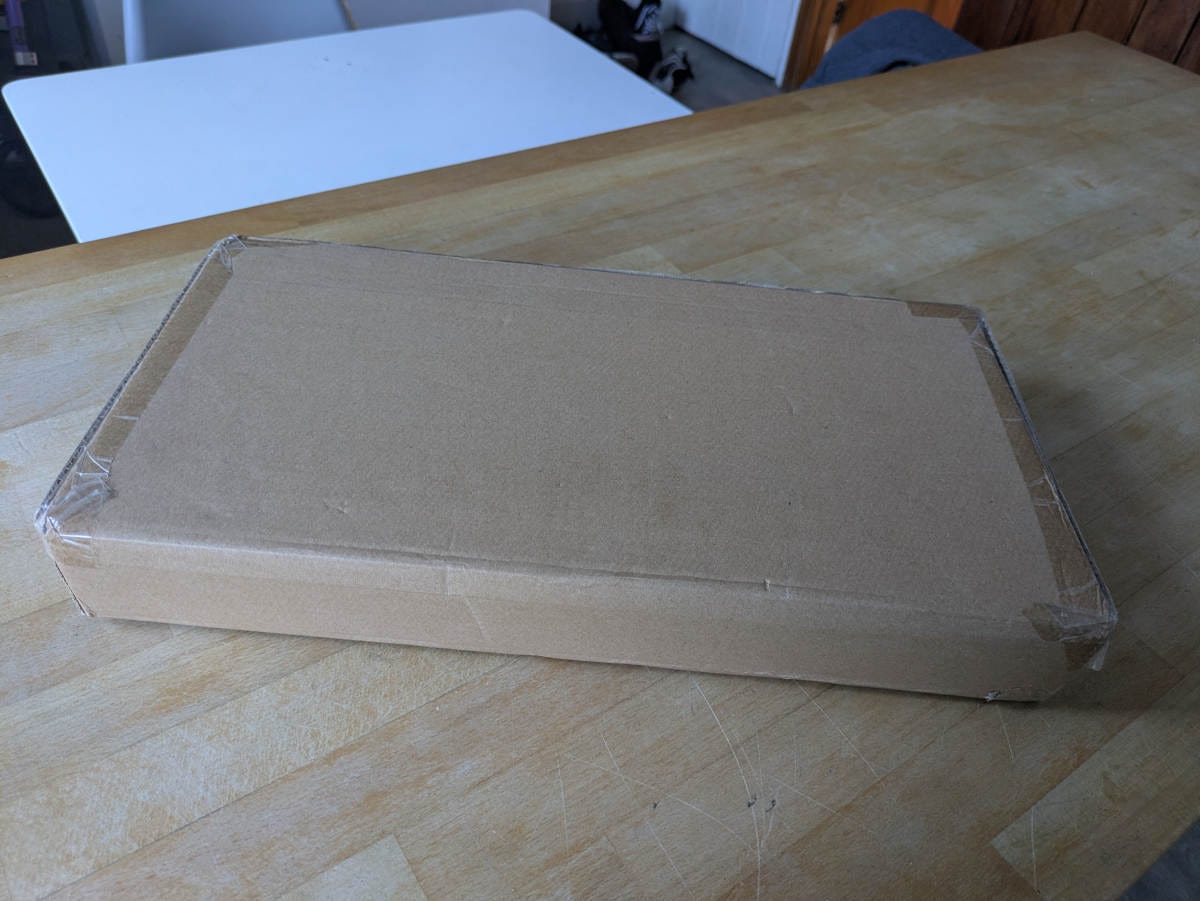
The following Saturday morning, about three days after I’d briefly lost myself in this world of broadly inconsequential kitchen furniture, I had a hospital visit to make, but as I was leaving the house I nearly tripped over a box that had been propped against the front door.
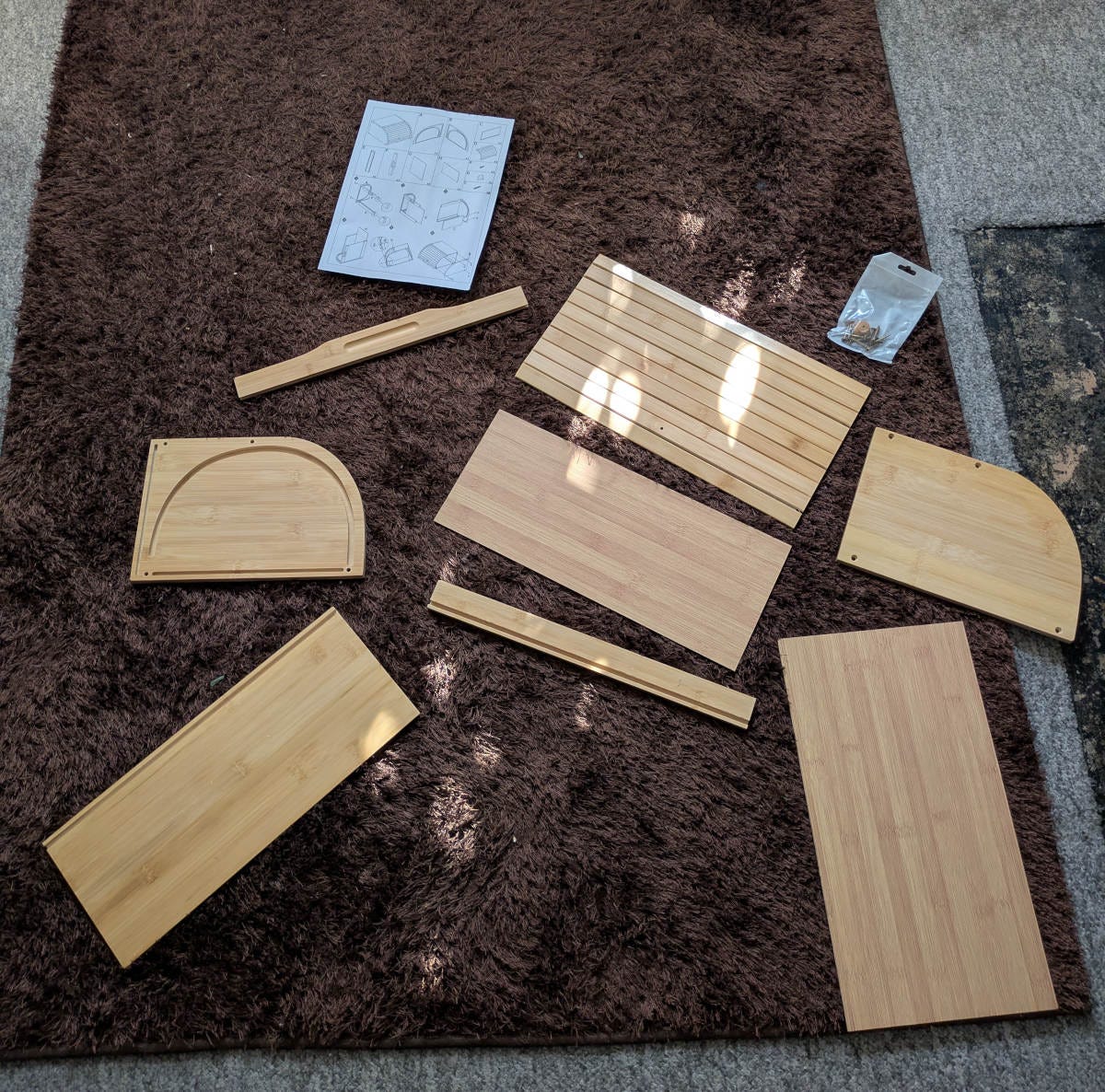
My train left in fifteen minutes and for reasons unknown I had to print my ticket at the station first, so I didn’t have time to particularly inspect it, but it was considerably flatter than I was expecting. I found the item on the website and scanned the description that I hadn’t really been paying attention to in my purchasing frenzy a few days earlier: “This product requires assembly.”
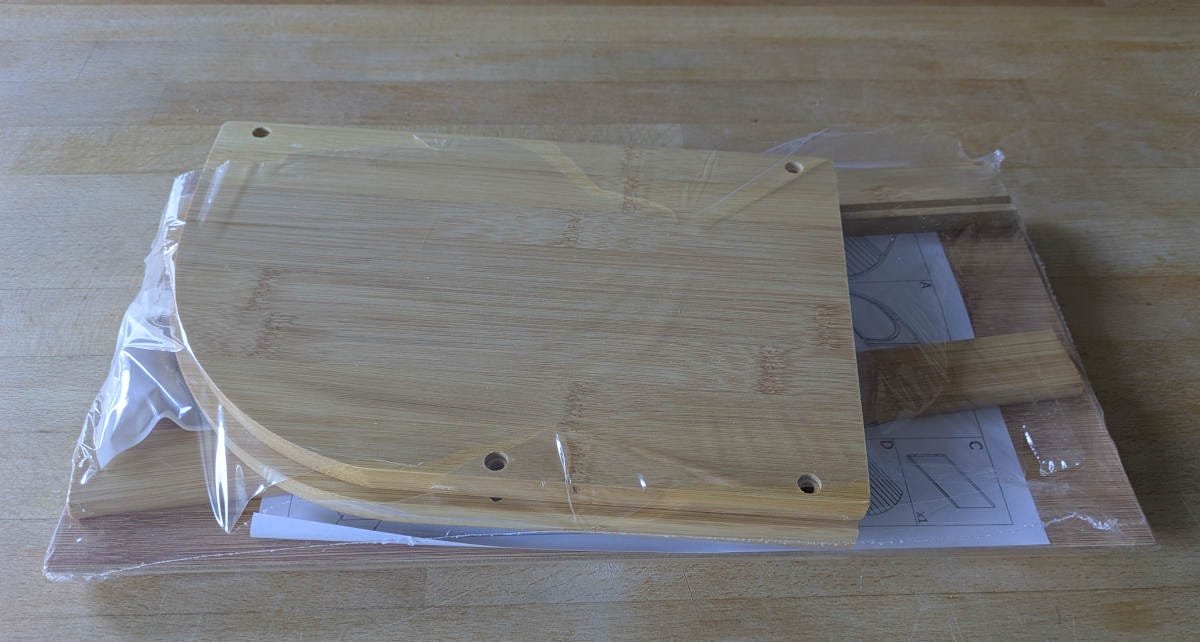
Now, my relationship with flat-pack furniture isn’t bad. As a drummer, I’ve been closely acquainted with Allen keys since I was a teenager, and I’m reasonably competent at following simple instructions. There was a time, when I was in my twenties or thirties, when flat-pack furniture was the low-cost, functional way of getting your domicile filled with items that would do a job for you.
But nowadays, my perspective is very different. When I look at it nowadays, I see in a crystal ball containing snapped off bits of chipboard, missing screws and washers, and the endless frustration of trying to interpret instructions written by somebody for whom English is their fourth language. Over the years, I have become convinced that it’s one of life’s bigger false economies.
Far better to buy second-hand from a charity shop, I’ve found. It’s better quality, already built (and by someone whose job it was to build it), and often cheaper, while the quality of flat-pack has taken an unfortunate turn in recent years. There’s only so many times you can come across a board with the consistency of a digestive biscuit before you go off the idea altogether.
I was out of the front door when I saw this parcel, so it had all day to fester in my mind. Questions started to form. How complicated could this be? Would a screwdriver be included, and if there wasn’t, did I know where my electric one was? How angry would I get with myself if something did go wrong, and how much more likely was this on account of a bread bin being far smaller than anything wooden that I’ve ever attacked with a screwdriver before?
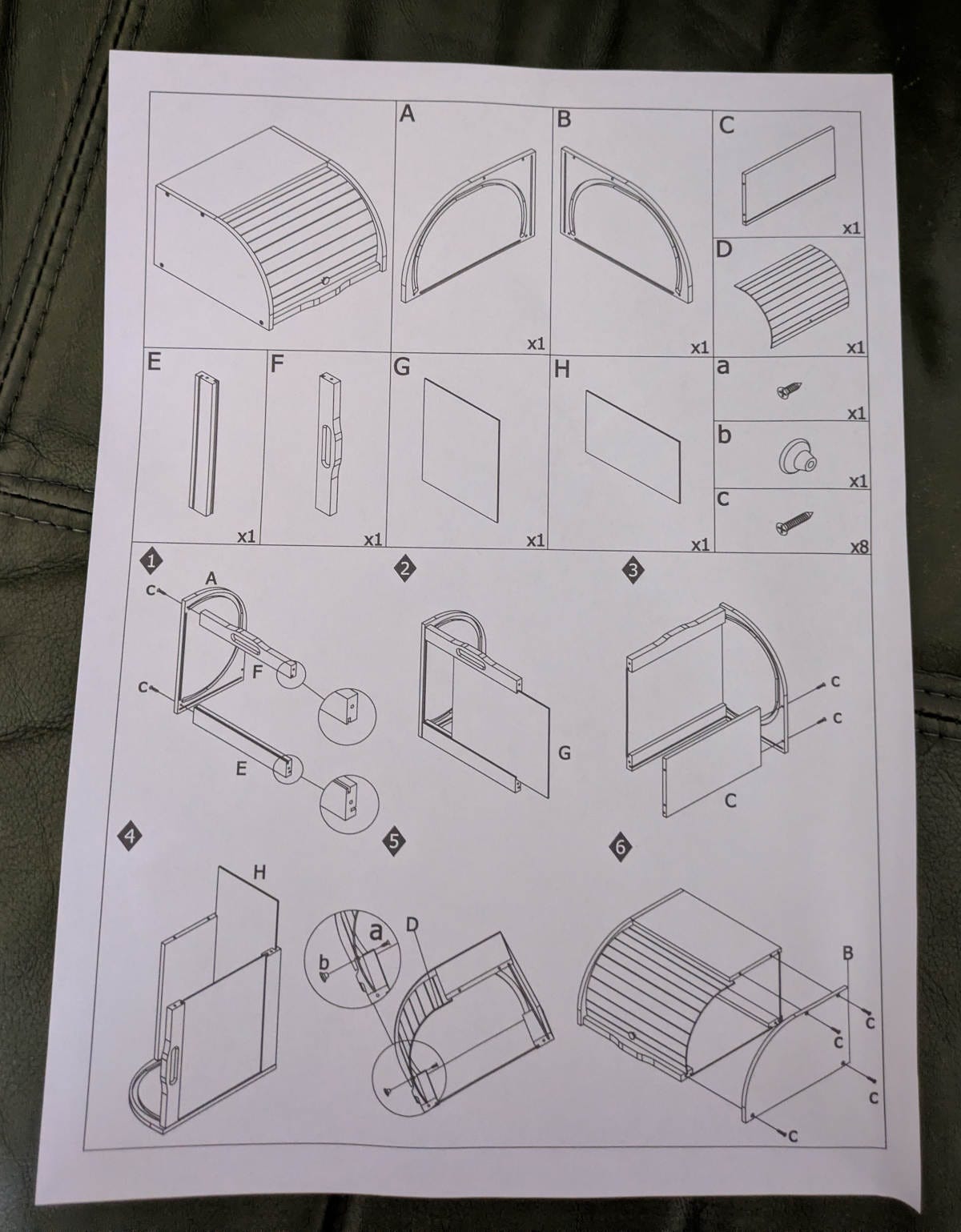
I got my answer to that question when I got home that evening. I’d already inspected the original picture on their website and established that there were only nine screws, which made it theoretically at least easier than the IKEA dresser that once took two of us all afternoon to assemble and which almost led to a full fist fight over missing washers.
I was tired and sweaty after a long afternoon out, and didn’t much fancy the job that evening, but the following day, I sat at the kitchen table with the instructions, which were extremely straightforward until I reached one particular panel:
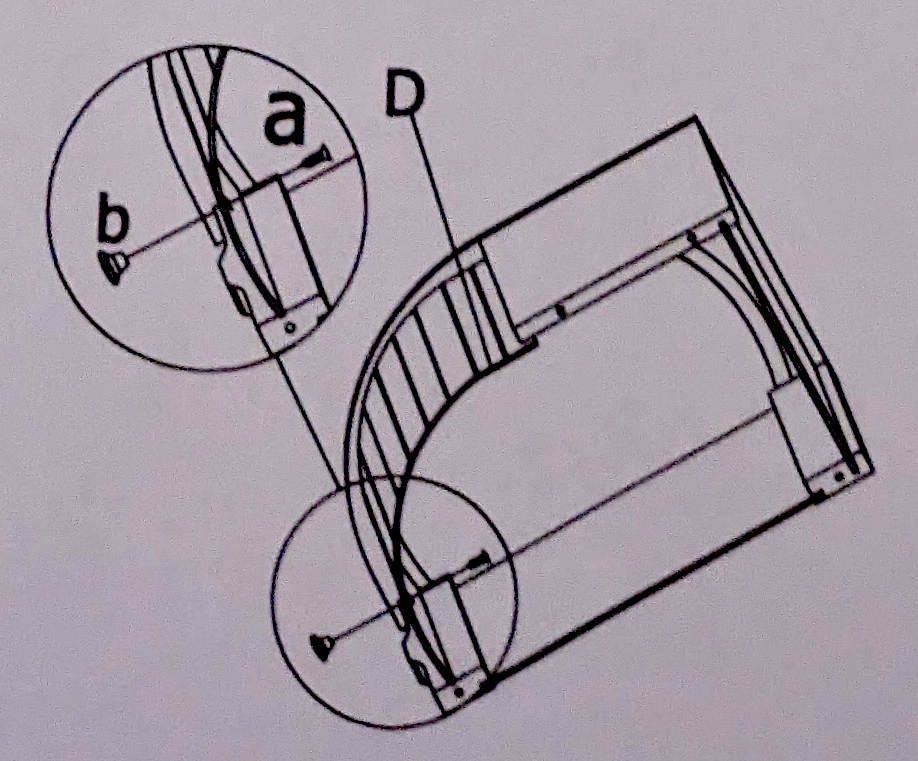
Ooooookay? I mean, I could make out the shapes that it’s supposed to be, but this particular image looked like three pictures all dropped on top of each other. “How complicated can this be?”, I ominously thought to myself as I opened the box with a pen-knife.
The answer to that question turned out to be not so much that it was complicated, more that it was just plain annoying. Screws needed to be screwed into thin stripes of bamboo, so there was no room for error in terms of them not being in a straight line, and to further complicate things, my electric screwdriver ran out of battery at the exact point at which I was attaching the lid, which was the nearest point I reached to throwing it through the kitchen window.
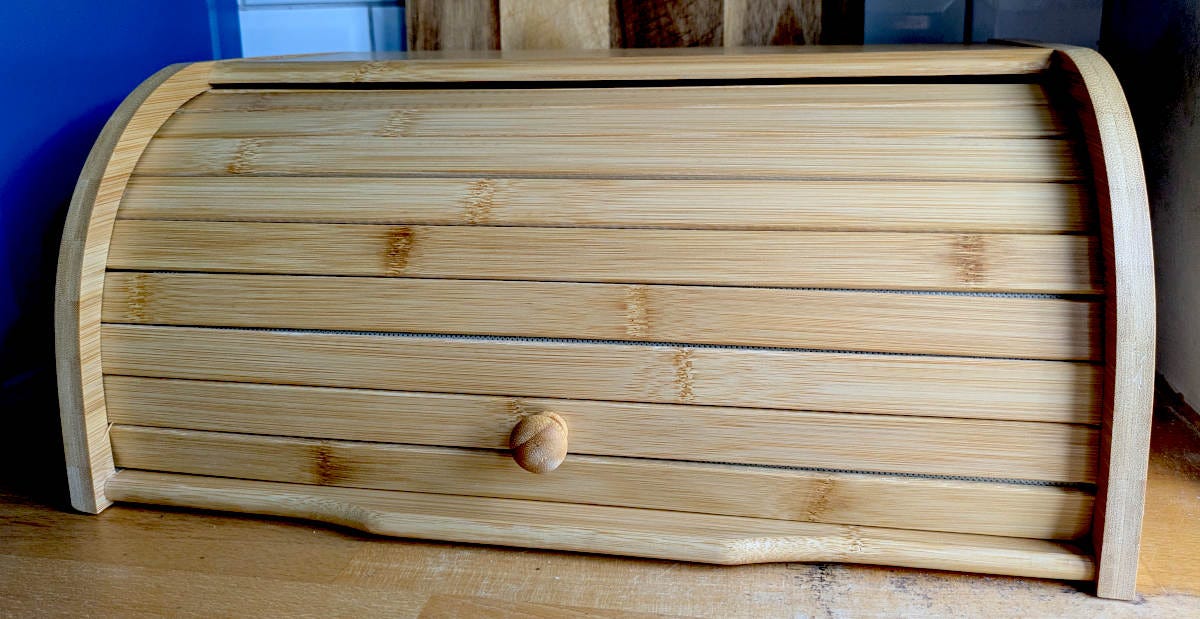
My kids, who are easily impressed, were impressed. “It’s the greatest bread bin I’ve ever seen!”, shrieked Younger, who is prone to hyperbole. “I like it, I like the lid,” said Older, who may be something of a people-pleaser, thoughtfully. A couple of hours later, a grocery delivery order turned up, and I was pleased to be able to confirm that two of our bog standard loaves of bread do indeed fit inside it at the same time.
Should it matter to you, that I’ve got a new bread bin? Well, obviously not, though I hope it reassures at least some of you that I’m not the sort of sex pervert who’d store their bread in the freezer. But does it matter to me? Well yeah, as it goes, it does. Disregarding the clear public health issue concerning the previous one for a moment, it’s a little, tiny improvement to my kitchen, and therefore to my life.
Since it’s bigger than the one that was there previously, it also provoked a complete reordering of that workspace, which in turn saw me clean corners that I don’t ordinarily get to, so my kitchen is a bit sparklier than it was before. And while it was about the least taxing piece of flat-pack I’ve ever put together and I don’t accept any credit for assembling any form of it as an act of carpentry, there is still a momentary flush of satisfaction when you finish something like this, take a step back and enjoy the completed object.
My tendency to leap into this sort of thing has essentially become a hobby. I’ll be 54 soon enough, but there’s still a lot that I don’t know about the world. I enjoy exploring my options, comparing prices, seeing if there’s anything about this subject that hadn’t even crossed my mind before.
And while I wouldn’t say that I consider myself an expert on bread bins as a result of the last few days or so, I do think that I could now hold my own in a conversation about them at a reasonably elevated level of knowledge, and in a way that I probably wouldn’t have done otherwise.
Did this experience broaden my horizons? Barely. Did I learn anything from the journey that might enrich me in other ways? Hell no. Am I a better person for the experience? No, but my kitchen is an iota cleaner and my bread is as a fresh as the Prince of Bel Air, and that’s plenty enough for me.